AI Workout Planner Guide: Smart Programming for Real Results
A 2023 report from the Journal of Medical Internet Research shows users following dynamic, auto-adjusted fitness programs adhere to their routines 43% longer than those using static templates. An AI workout planner removes the guesswork by tracking your progression, managing fatigue, and forcing progressive overload systematically. Busy professionals and beginners often struggle with rigid gym schedules that punish missed days or poor sleep. Adaptive algorithms solve this friction by rewriting your program in real-time based on your actual daily performance. This guide explains exactly how machine learning adapts to your unique physiology, replacing rigid spreadsheets with responsive, data-driven personal training.
Key Takeaways:
- Algorithmic adjustments prevent muscle plateaus by modulating training volume based on your daily readiness scores.
- Machine learning protocols reduce overuse injuries by detecting fatigue patterns earlier than human intuition.
- Dynamic progression tracking eliminates the need for manual spreadsheet calculations during complex lifting cycles.
- Auto-regulated training models cost approximately 80% less annually compared to traditional in-person personal training.
What is an AI Workout Planner?
An AI workout planner is a software application that relies on machine learning algorithms to generate, monitor, and adjust exercise routines based on ongoing physiological feedback. The system requires baseline data like age, training experience, and strength metrics to establish an initial training block. Mathematical models then calculate your optimal daily volume and intensity to stimulate muscle growth without causing severe overtraining.
Data from the International Health, Racquet & Sportsclub Association (IHRSA) in 2023 revealed that 55% of traditional gym members quit within six months. Conversely, a Stanford University digital health study (2022) found a 62% increase in workout consistency when users utilized algorithmic scheduling. The same research indicated a 15% reduction in overuse injuries among algorithm-guided trainees compared to self-directed individuals.
Traditional programs fail because they assume your energy levels remain identical every single week. Machine learning models understand that biological systems fluctuate, adjusting your prescribed sets and reps down on days you sleep poorly. This fluid approach ensures you stimulate the muscle adequately without breaching your maximum recoverable volume.
The Science Behind Artificial Intelligence Fitness Training
Artificial intelligence fitness training operates on the biological principle of progressive overload, using mathematical equations to ensure you constantly lift slightly more weight or perform more reps over time. A 2022 meta-analysis in Sports Medicine demonstrated that auto-regulated training programs yield a 12% greater increase in maximal strength compared to fixed-set programs. The algorithm measures your precise output each session and recalculates your one-rep max (1RM) invisibly in the background.
Central Nervous System (CNS) fatigue is incredibly difficult for humans to quantify without laboratory equipment. Computer models solve this by tracking your performance degradation across multiple sets of a specific exercise. If your rep velocity drops drastically on your third set of squats, the system automatically lowers the weight prescription for your fourth set.
Your body adapts to stress through a mechanism known as the General Adaptation Syndrome (GAS). Algorithms map this biological response by periodizing your training—meaning they intentionally vary the stress placed on your muscles across different weeks. This prevents your body from fully adapting to a routine, forcing continuous muscle protein synthesis.
Linear vs. Undulating Periodization Models
Linear periodization adds weight to the bar in a straight, predictable line week after week. Beginners respond well to this, and smart algorithms automatically apply linear models during the first three months of a user's journey. However, intermediate lifters hit physiological walls quickly with this straightforward approach.
Daily Undulating Periodization (DUP) shifts the rep ranges and intensities every single session to target different muscle fiber types. A computer handles DUP effortlessly, scheduling heavy, low-rep neural work on Monday and lighter, high-rep metabolic work on Wednesday. Managing this complex math manually requires extensive spreadsheets, but software executes it instantly.
How an AI Fitness App Adapts to Your Progression
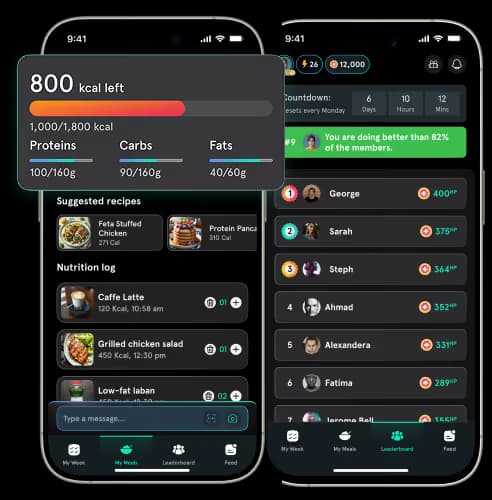
An AI fitness app uses daily feedback metrics, such as Rate of Perceived Exertion (RPE), to manipulate your subsequent workouts and match your exact readiness level. When life interrupts your schedule, Trainmate utilizes dynamic workout generation to automatically adjust your daily sets and reps based on logged fatigue levels, ensuring you never hit a progress wall. This means a missed Wednesday session gracefully redistributes your weekly lifting volume across Thursday and Friday automatically.
Neurological adaptations happen faster than structural muscle growth during your first few weeks of lifting. An algorithm tracks how quickly you gain strength on complex movements like deadlifts and adjusts your trajectory curve steeper than it would for a seasoned lifter. This precision prevents beginners from under-training during their most crucial window for rapid gains.
Tracking your subjective fatigue is just as critical as tracking the physical weight on the bar. You enter a simple score from 1 to 10 detailing how hard a specific set felt, and the logic engine correlates that with your historical performance. If you consistently rate weights as heavier than they should be, the app triggers a deload week to allow your joints and tendons to recover fully.
Key Insight: Software algorithms can detect microscopic downward trends in your lifting volume 14 to 21 days before you actually feel the physical symptoms of overtraining.
AI vs. Human Coach: The Hard Data
Comparing machine learning platforms to human personal trainers reveals stark differences in data processing speed, historical recall, and long-term financial feasibility. Humans excel at real-time biomechanical feedback and emotional support, which remains crucial for absolute beginners learning how to hinge at the hips. Computers, however, possess perfect memory regarding your training history, knowing exactly what you lifted on a Tuesday eight months ago.
Financial accessibility remains the largest barrier to entry for professional fitness programming. The average cost of a certified personal trainer sits at $60 per hour, making a three-day-a-week habit prohibitively expensive for most busy professionals. Algorithmic software democratizes this expertise, providing elite-level periodization logic for less than the cost of a single gym visit.
Hybrid approaches often yield the most dramatic physical transformations for those with disposable income. Users hire a human coach for one session a month to check their squat depth and barbell trajectory. They then rely on their digital application to handle the daily mathematical progression, combining perfect form with perfect programming logic.
Finding the Best AI Workout Generator
The best AI workout generator must feature volume auto-regulation, dynamic exercise swapping, and logical progression models rather than randomized daily routines. Many applications falsely market themselves as artificial intelligence when they actually just run a simple script pulling random exercises from a database. True machine learning evaluates your past performance to dictate your future programming accurately.
Exercise swapping logic separates professional-grade applications from amateur tools. If all the bench press stations are occupied at your gym, you need an app that instantly calculates the exact dumbbell weight required to match the mechanical tension of your prescribed barbell sets. This fluidity keeps your heart rate elevated and prevents you from standing around waiting for equipment.
Transparency in how the application determines your next step builds user trust and long-term adherence. You should clearly see why the system is telling you to drop the weight by five pounds today. Apps that hide their logic behind a black box often frustrate users who want to learn the fundamentals of physical culture while they train.
Machine Learning and Recovery Management
Recovery algorithms analyze external health data, including sleep duration and daily activity levels, to dictate how intensely you should train on any given day. System integrations allow apps like Trainmate to read your daily step counts from your phone's native health database, adjusting your lower body lifting volume if you just hiked six miles. This holistic view of your physical output prevents the compounding fatigue that leads to chronic injuries.
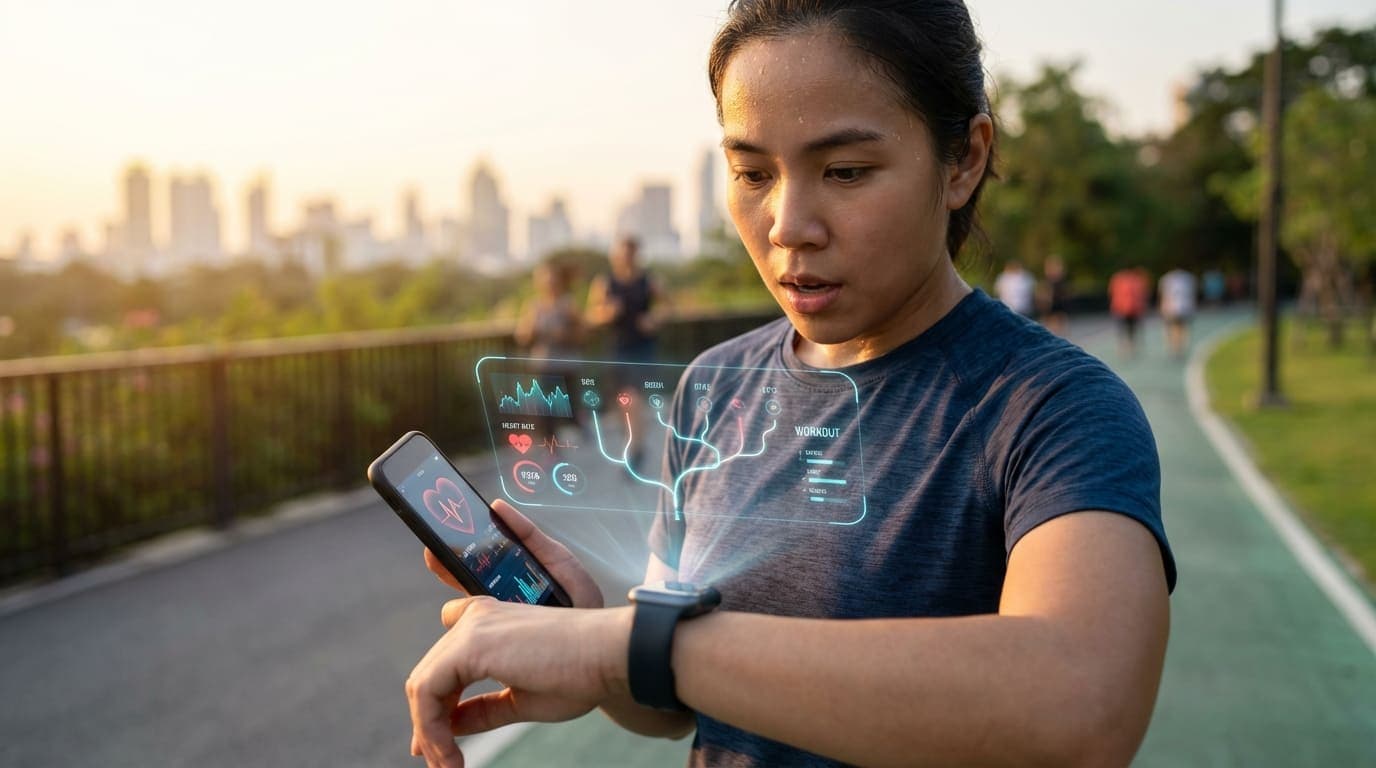
Heart Rate Variability (HRV) serves as the gold standard metric for central nervous system readiness. Advanced fitness algorithms ingest this biometric data directly from your wearable devices each morning. A suppressed HRV score indicates deep systemic fatigue, prompting the software to automatically swap your heavy barbell squats for lighter, structured walking routines or mobility work.
Muscle tissue requires roughly 48 hours to complete the protein synthesis cycle after a strenuous lifting session. Algorithms track exactly which muscle groups you fatigued and map out your weekly schedule to prevent overlapping soreness. If your chest is still recovering from Monday, the system ensures Wednesday focuses exclusively on your posterior chain and core stabilization.
Overcoming Plateaus with Algorithmic Adjustments
Algorithmic adjustments break through muscle-building plateaus by systematically rotating exercises, altering rep tempos, and manipulating rest periods to introduce novel stimuli. Biological systems are incredibly efficient, meaning your body eventually learns how to perform a movement while burning the fewest calories and recruiting the least amount of muscle tissue. Software detects when your weight progression stalls for two consecutive weeks and immediately intervenes.
Mechanical tension remains the primary driver of hypertrophy, but metabolic stress serves as a powerful secondary pathway for growth. When the computer realizes you cannot safely add more physical plates to the bar, it shifts your protocol to higher rep ranges with shortened rest intervals. This creates an intense cellular swelling effect, forcing the muscle fibers to adapt without crushing your joints under maximal loads.
Periodization blocks typically last four to six weeks before the software introduces a completely new training stimulus. You might spend a month focused purely on heavy sets of five reps to build dense myofibrillar tissue. The algorithm will then seamlessly transition you into a block focused on sets of twelve to fifteen reps, building your sarcoplasmic work capacity and cardiovascular endurance.
Nutritional Synergy in Algorithmic Training
Physical training algorithms become exponentially more effective when their data output syncs seamlessly with your daily caloric intake and macronutrient tracking. Building new muscle tissue requires a caloric surplus, while burning fat necessitates a calculated caloric deficit. When your software knows exactly how many calories you burned during your leg workout, it can adjust your dietary targets for that specific afternoon.
Protein timing and daily quotas govern your ability to recover from the intense mechanical damage inflicted by algorithmic volume spikes. You must consume roughly 0.7 to 1 gram of protein per pound of body weight to facilitate optimal repair. Integrating this data allows the system to warn you if your low protein intake is the root cause of your recent strength plateau.
Carbohydrate intake heavily influences your performance during highly glycolytic, high-volume training blocks. If the algorithm prescribes sets of fifteen reps for your lower body, it expects your glycogen stores to be fully saturated. Following budget-friendly nutrition protocols ensures you fuel these intense machine-generated workouts without spending excessively on premium supplements.
Analyzing Joint Stress and Injury Prevention
Machine learning mitigates joint stress by calculating total weekly tonnage across specific movement patterns and forcing reductions before connective tissue fails. Tendons and ligaments adapt to physical stress at a significantly slower rate than muscle bellies due to limited blood flow. A computer meticulously tracks how much load your patellar tendon has absorbed this month, restricting jumping movements if the threshold is breached.
Balancing pushing and pulling volume prevents the severe postural deviations common among recreational gym-goers. Algorithms inherently program strict ratios, ensuring that for every horizontal pressing movement you perform, you execute an equal amount of horizontal pulling. This mathematical balance keeps your shoulders healthy and retracts your scapula effectively.
Exercise selection logic actively rotates movements to prevent repetitive strain injuries. If you spent the last eight weeks heavily loading your spine with back squats, the system transitions you to Bulgarian split squats or leg presses. This gives your axial skeleton a required break while balancing calisthenics and free weights to maintain high levels of localized muscle stimulation.
The Economics of Algorithmic Fitness
The financial efficiency of algorithmic fitness allows average consumers to access Olympic-level periodization science for a fraction of traditional coaching costs. Eliminating the geographical constraints of finding a highly educated coach in your specific city transforms how society approaches physical health. You no longer need to live near a high-performance facility to benefit from complex undulating periodization models.
Meeting the CDC physical activity guidelines requires a mix of cardiovascular effort and resistance training twice a week. Structuring this efficiently demands knowledge that most beginners simply do not possess, leading to wasted gym memberships. Spending a small monthly fee on intelligent software acts as an insurance policy, guaranteeing that your time spent sweating actually translates into measurable physiological changes.
Time serves as the ultimate non-renewable resource for busy professionals trying to stay healthy. Wandering around a fitness facility wondering what exercise to do next wastes precious minutes and destroys training momentum. Having a mathematically optimized plan immediately available on your smartphone condenses a highly effective workout into a strict 45-minute window.
Step-by-Step: Your First 30 Days With Machine Learning
Executing a perfect launch with an algorithmic fitness platform requires providing accurate baseline data and resisting the urge to override the system's daily prescriptions manually. The computer needs clean, honest data to model your physiological responses accurately. Follow this strict protocol during your first month to calibrate the engine properly.
- Establish True Baselines — Input your current age, weight, and honest experience level. Do not exaggerate your strength metrics, as this will force the algorithm to prescribe dangerously heavy starting weights.
- Complete the Assessment Week — Treat the first five days as a data-gathering mission. Perform the prescribed exercises with perfect form and log your RPE (Rate of Perceived Exertion) meticulously after every single set.
- Monitor the Initial Adjustments — Observe how the app changes your week two volume based on your week one soreness. If you reported high fatigue, watch the software intelligently reduce your sets to facilitate recovery.
- Sync Your External Data — Connect your wearable devices to allow the platform to read your daily sleep metrics and resting heart rate, giving the system a 360-degree view of your recovery status.
- Commit to the Process — Stop second-guessing the mathematical progression. Even if a prescribed weight feels slightly too light on week three, execute it exactly as written to allow the periodization model to peak your strength on week four.
Practical Tool: 5-Minute AI Training Checklist
Run through this rapid readiness checklist before you step onto the gym floor to ensure your digital protocol matches your current biological state. Failing to contextualize your algorithm's instructions with your real-world physical condition leads to subpar training sessions. Use this tool daily to optimize your interaction with the software.
- Assess your sleep quality from the previous night; if under 6 hours, proactively instruct the app to reduce today's volume by 10%.
- Check your resting heart rate baseline; an elevation of more than 5 BPM indicates systemic fatigue requiring a lighter session.
- Review the prescribed exercises for the day and utilize the app's swap feature immediately if a specific joint feels acutely painful.
- Confirm you consumed adequate carbohydrates within the last 120 minutes to fuel the specific rep ranges the algorithm mapped out.
- Set your mental intent to strictly follow the mandated rest periods between sets, as the software calculates these precisely to manage your metabolic fatigue.
Frequently Asked Questions
What is an AI workout planner?
An AI workout planner is a digital application that uses machine learning to design, track, and automatically adjust your fitness routine. It analyzes your daily performance data, fatigue levels, and past workouts to continuously calculate the optimal sets, reps, and weights required to force muscle adaptation safely.
How accurate are AI fitness apps for building muscle?
AI fitness apps are highly accurate for building muscle because they strictly enforce progressive overload, the primary biological driver of hypertrophy. By tracking exact repetition math and volume tonnage, the algorithm ensures you consistently expose your muscles to slightly more tension than your previous session, eliminating human mathematical errors.
Can artificial intelligence replace a personal trainer?
Artificial intelligence completely replaces the programming and mathematical progression aspects of a personal trainer. However, it cannot replace the real-time biomechanical form correction or the in-person emotional accountability that a human coach provides. AI is best for users who already understand basic exercise form but need advanced routine structure.
Why does my AI workout generator lower my weights?
Your AI workout generator lowers your weights to manage central nervous system fatigue and prevent overuse injuries. If the algorithm detects a drop in your repetition speed or you log high exertion scores, it automatically initiates a deload protocol, lowering the physical stress to allow your tendons and muscles to recover.
What is the best AI workout generator feature to look for?
The best feature to demand in an AI workout generator is volume auto-regulation based on Rate of Perceived Exertion (RPE). This specific mechanism allows the application to dynamically shift your workout intensity on a daily basis, accommodating for poor sleep, high stress, or residual muscle soreness.
Do AI fitness routines help with weight loss?
Yes, AI fitness routines accelerate weight loss by optimizing your resistance training to preserve lean muscle mass while you remain in a caloric deficit. Preserving muscle tissue keeps your basal metabolic rate elevated, meaning your body naturally burns more calories at rest throughout the entire day.
How long does it take for machine learning to adapt to my body?
It typically takes an algorithmic program two to three weeks of consistent data logging to map your specific strength curves and recovery capabilities. During this initial calibration phase, the software learns exactly how fast you adapt to mechanical tension and sets your long-term progression trajectory accordingly.
Can beginners use artificial intelligence fitness training?
Beginners benefit immensely from artificial intelligence fitness training because the software prevents them from doing too much volume too quickly. The algorithm sets safe, logical boundaries, ensuring novices build a strong foundation of connective tissue strength before attempting heavy, complex barbell movements.
The Future of Training
The era of bringing a crumpled, static spreadsheet to the gym is rapidly ending. An AI workout planner utilizes precise mathematical modeling to ensure every drop of sweat contributes directly to your physical adaptation. Stop guessing what weight you should lift next and let data dictate your progression curve. The next massive leap in physical culture will be the seamless integration of real-time biometric sensors directly communicating with these training algorithms during your actual sets. Transform your smartphone into your most valuable training asset today by committing to a scientifically auto-regulated routine.
Achieving your goals requires consistency, and nothing builds consistency like a plan that adapts to your chaotic life. Trainmate's step tracking and dynamic workout generation take the complex science of periodization and distill it into an intuitive daily checklist. Stop worrying about the math of muscle building—download Trainmate and let the algorithm guide your next session.