The Zero-Equipment Beginner Bodyweight Workout Plan to Start Your Fitness Journey
According to a 2022 Centers for Disease Control and Prevention (CDC) report, only 24.2% of adults meet the physical activity guidelines for both aerobic and muscle-strengthening activities. You do not need a gym membership, complex machines, or heavy dumbbells to change that statistic. A beginner bodyweight workout plan removes the logistical barriers between you and consistent exercise.
This guide strips fitness down to its absolute essentials. You will learn how to scale the four fundamental human movement patterns to a true baseline level, allowing you to train safely in your living room. By mastering these basic mechanics first, you build a resilient foundation for long-term physical health.
Key Insight: Your body cannot distinguish between resistance provided by a cast-iron weight and resistance provided by gravity acting on your own mass. Tension is tension, and your muscles adapt to whatever specific tension they are forced to overcome.
Key Takeaways
- Master the four basics: Focus entirely on the push, pull, squat, and hinge movements before adding complexity.
- Scale to your level: Use structural regressions, like wall push-ups and chair squats, to train safely without extreme soreness.
- Train three days weekly: Execute full-body sessions 72 hours apart to allow central nervous system recovery and muscle tissue repair.
- Track progressive overload: Increase difficulty by adding repetitions, improving range of motion, or altering leverage angles over a 12-week period.
Table of Contents
- Overcoming Gym Intimidation: Why Start Working Out at Home
- The 4 Fundamental Movement Patterns for Calisthenics for Beginners
- Your No Equipment Workout Starter Routine
- Mastering Progression and Recovery Fundamentals
- Common Mistakes Absolute Beginners Make
- Practical Tool: 10-Minute Pre-Workout Checklist
- Frequently Asked Questions
Overcoming Gym Intimidation: Why Start Working Out at Home
The fitness industry heavily markets the idea that progress requires commercial facilities and specialized equipment. This creates artificial barriers. A 2021 study published in the Journal of Health Psychology found that perceived gym intimidation actively prevents 65% of sedentary adults from initiating an exercise routine. Furthermore, a 2023 survey by RunRepeat revealed that 48% of individuals point to a lack of time as their primary reason for avoiding exercise.
When you start working out at home, you eliminate commute times, membership fees, and performance anxiety. You control the environment, the temperature, and the schedule. This low-friction environment makes it significantly easier to establish the foundational habit of showing up.
If you currently struggle with the concept of exercising in public, learning how to overcome gym anxiety starts with building base competence in private. Developing bodily awareness and physical capacity in your living room provides the self-efficacy needed to eventually step into a commercial facility, should you ever choose to do so.
The 4 Fundamental Movement Patterns for Calisthenics for Beginners
Calisthenics for beginners is often misunderstood as doing sets of 50 standard push-ups or complex pull-ups on day one. True beginner programming scales exercises to match your current strength level. Every routine should incorporate the four basic human movement patterns outlined below.
1. The Push (Horizontal Pressing)
Pressing movements target your pectorals, anterior deltoids, and triceps. Most adults lack the core stability and upper body strength to perform a standard push-up on the floor safely. Attempting them prematurely leads to lower back sagging and shoulder impingement.
Start with the Wall Push-Up. Stand two feet away from a sturdy wall, place your hands shoulder-width apart at chest height, and lower your body until your nose nearly touches the wall. Push back to the starting position while keeping your core braced as if preparing for a punch to the stomach.
Once you can perform three sets of twenty wall push-ups effortlessly, progress to incline push-ups using a sturdy countertop or the back of a solid couch. The higher the surface, the less bodyweight you have to press.
2. The Squat (Knee Dominant)
Squatting is essential for quadriceps development, knee joint health, and functional independence. A proper squat requires mobility in the ankles and hips, which prolonged sitting often restricts.
The Chair Squat is the ideal starting point. Place a standard dining chair behind you. Stand with your feet slightly wider than shoulder-width apart. Push your hips back as if searching for the chair, keeping your chest tall. Lightly tap your glutes to the chair without completely relaxing your weight, then drive through your mid-foot to stand back up.
This regression removes the fear of falling backward and acts as a strict depth gauge. Focus on keeping your knees tracking in the exact same direction as your toes. Never let your knees collapse inward during the ascent.
3. The Hinge (Hip Dominant)
Hip hinging targets the posterior chain: the glutes, hamstrings, and erector spinae. Modern sedentary lifestyles cause glute amnesia, where the gluteal muscles become deactivated and weak, forcing the lower back to compensate during daily movements.
The Glute Bridge isolates these muscles safely on the floor. Lie on your back with your knees bent and feet flat on the ground, hip-width apart. Drive your heels into the floor and squeeze your glutes to lift your hips toward the ceiling. Your body should form a straight line from your shoulders to your knees.
Hold the top position for two seconds, actively squeezing your glutes, before lowering down under control. Do not overextend your lower back; the movement must come entirely from the hips.
4. The Pull (Horizontal Pulling)
Pulling exercises are notoriously difficult to perform without equipment, but they are critical for posture and upper back strength. They target the latissimus dorsi, rhomboids, and biceps.
The Doorway Row provides a zero-equipment solution. Stand facing a sturdy doorframe. Grip the frame with both hands at chest height. Walk your feet closer to the frame so you are leaning back at an angle, supporting your weight with your arms. Pull your chest toward the doorframe by driving your elbows backward and squeezing your shoulder blades together.
The NHS strength and flexibility guidelines emphasize that adults should perform strength exercises hitting all major muscle groups twice a week. Pulling movements effectively counteract the forward-rounded posture caused by typing and driving.
Your No Equipment Workout Starter Routine
Muscle tissue requires stimulus, recovery, and adaptation. Training every day yields diminishing returns for beginners because muscles grow during the recovery phase, not during the workout itself. Execute this routine three days per week, resting at least 48 hours between sessions (for example, Monday, Wednesday, and Friday).
Perform the following circuit. Complete all sets of one exercise before moving to the next. Rest exactly 90 seconds between each set to ensure adequate energy system replenishment.
- Warm-up: 3 minutes of brisk walking in place and arm circles.
- Chair Squats: 3 sets of 8 to 12 repetitions.
- Wall Push-Ups: 3 sets of 10 to 15 repetitions.
- Glute Bridges: 3 sets of 12 to 15 repetitions.
- Doorway Rows: 3 sets of 8 to 12 repetitions.
- Plank Hold: 3 sets of 15 to 30 seconds (elevate your hands on a couch if the floor is too difficult).
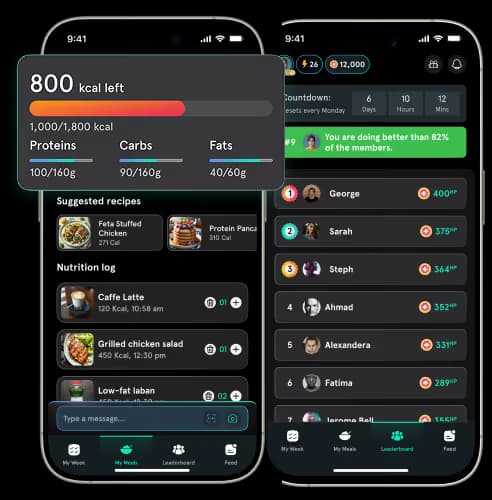
Logging your data is non-negotiable for sustained progress. Trainmate allows you to generate customized home workouts by setting the AI preferences to 'no equipment' and 'beginner'. This ensures the application automatically scales the rep ranges based on your weekly performance, keeping you in the optimal zone for strength development without overtraining.
Mastering Progression and Recovery Fundamentals
Doing the exact same routine for six months leads to stagnation. Your body adapts to the specific stimulus provided. To continue seeing changes in body composition and strength, you must implement strict progressive overload over time.
Understanding how to apply progressive overload at home involves manipulating variables safely. Once you hit the maximum recommended repetitions for an exercise (like 15 wall push-ups), increase the difficulty. Move to a lower surface for push-ups, or perform your chair squats with a strict three-second pause at the bottom to increase muscular tension.
A 2017 systematic review published in the Journal of Strength and Conditioning Research confirmed that low-load resistance training promotes significant muscle hypertrophy, provided the exercises are taken close to muscular failure.
Recovery ultimately dictates your results. Aim for 1.6 grams of protein per kilogram of body weight to facilitate muscle repair. Additionally, optimizing sleep for muscle recovery ensures your endocrine system releases the necessary growth hormones to rebuild the tissue you broke down during the workout.
Common Mistakes Absolute Beginners Make
Identifying errors early prevents acute injuries and long-term frustration. The most common mistake absolute beginners make is treating a strength workout like a cardiovascular session. Rushing through repetitions uses momentum rather than localized muscle tension.
Take two full seconds to lower yourself during a movement, pause for one second at the bottom, and take one second to return to the start. This strict time-under-tension forces the muscle fibers to recruit effectively and protects your joints from ballistic shock.
Another frequent error is holding your breath. The Valsalva maneuver (holding your breath during exertion) spikes blood pressure and causes rapid dizziness. Exhale during the hardest part of the movement (the push or the pull) and inhale deeply during the lowering phase.
Building a new routine is heavily reliant on behavioral systems. By staying consistent via habit stacking and using Trainmate's daily step tracking alongside your new bodyweight routine, you provide yourself with a clear view of your daily energy expenditure. This keeps your fitness goals visible even on days you do not formally train.
Practical Tool: 10-Minute Pre-Workout Checklist
Before starting your beginner bodyweight workout plan, run through this quick operational checklist to ensure a safe and effective session.
- Clear your space: Ensure a 6-foot radius around your workout area is completely free of tripping hazards, pets, and loose rugs.
- Hydrate: Drink 8 to 12 ounces of water 30 minutes prior to beginning the first warm-up set.
- Set the environment: Turn on bright overhead lights and select an upbeat audio track. Environment dictates energy levels.
- Perform a joint check: Slowly rotate your wrists, shoulders, hips, and ankles to assess for any acute stiffness or sharp pain.
- Review the log: Check your previous session's rep counts so you know exactly what numbers you need to beat today.
Frequently Asked Questions
How often should a beginner do a bodyweight workout?
Absolute beginners should complete full-body resistance training two to three times per week. This frequency provides enough stimulus to trigger muscle protein synthesis while allowing 48 to 72 hours of mandatory recovery time for tissue repair and central nervous system rest.
Can I build muscle with just bodyweight exercises?
Yes, muscle tissue responds to mechanical tension, regardless of the source. By manipulating leverage, utilizing single-limb variations, and slowing down repetition tempos, you can provide sufficient resistance to stimulate significant muscle hypertrophy without ever lifting traditional free weights in a gym.
What if I cannot do a single push-up?
Standard push-ups are an advanced movement requiring high core stability and chest strength. Start by doing push-ups vertically against a wall. Once you can execute three sets of twenty repetitions comfortably, move to a high countertop, gradually decreasing the angle over time.
How long will it take to see results from working out at home?
Neurological adaptations occur within the first two weeks, meaning you will feel stronger and more coordinated quickly. Visible changes in muscle tone and body composition typically require eight to twelve weeks of consistent training, paired with a protein-rich, calorie-appropriate diet.
Do I need a warm-up for a no equipment workout?
Yes, a warm-up is strictly required to prevent injury. Even low-intensity bodyweight movements can strain cold muscle tissue. Spend three to five minutes elevating your core body temperature through light dynamic movements, such as walking in place, arm circles, and gentle torso twists.
The Path Forward
The hardest part of any fitness journey is the first repetition. By utilizing a beginner bodyweight workout plan, you systematically dismantle the excuses of time, money, and location. You possess the exact tools required to transform your physical health immediately without leaving your home.
Focus strictly on mastering the basic push, pull, squat, and hinge patterns. Prioritize slow, controlled execution over high repetition counts, and track your data rigorously. As your physical competence grows, your mental confidence will scale alongside your strength.
Start building your foundation today without ever stepping foot in a commercial facility. Download Trainmate to generate your custom beginner workout plan, adjust the AI settings to match your equipment constraints, and hit your fitness goals from the comfort of your living room.